组件背景: 因为很多的业务平台,大多数进行数据查询的时候,需要通过memberId去做数据隔离。同时 配合统一sql重新组件的工作,所以需要通过在框架层面上对rpc上下文参数进行设置、校 验、传递。
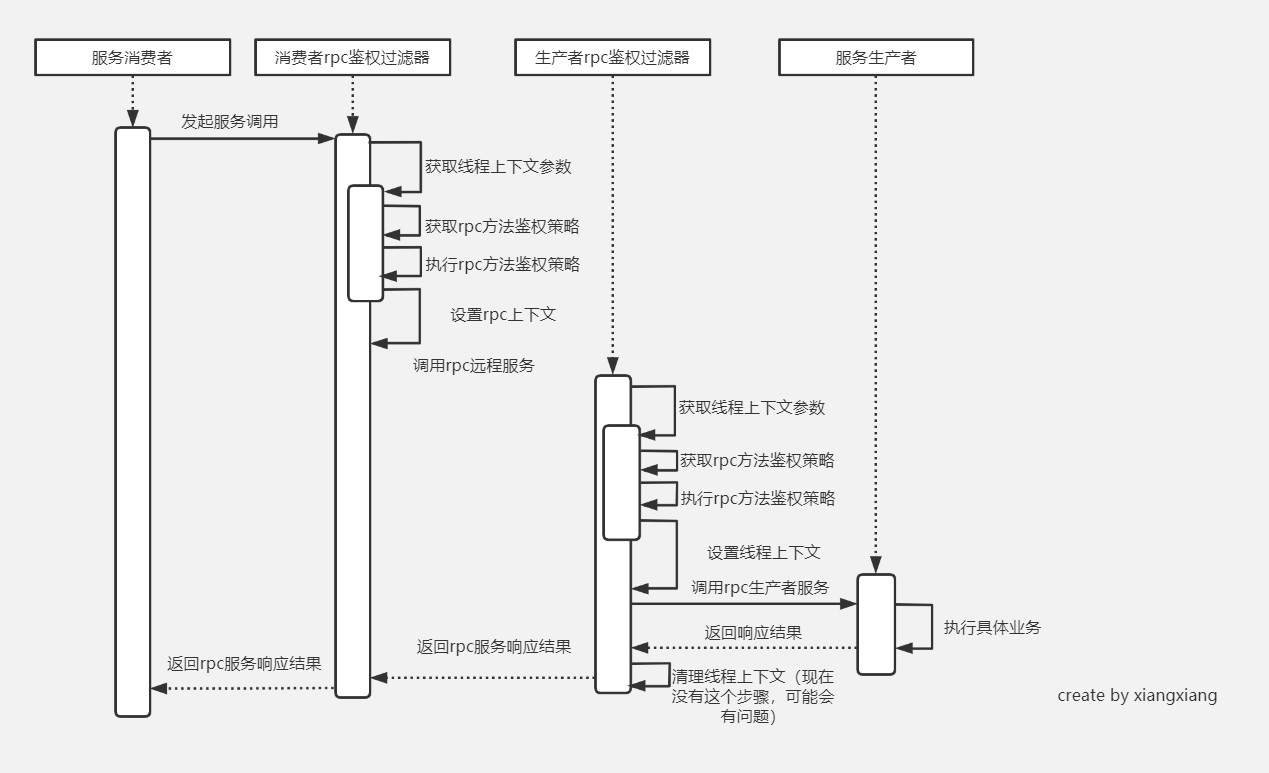
组件原理: 1.在服务消费端通过dubbo过滤器,从线程级变量中获取上下文参数(saas中只要判断 memberId是否存在),并判断当前请求接口是否需要进行鉴权,如果需要进行鉴权而则校 验上下文参数是否合法,不合法则直接抛出异常;
rpc统一鉴权时序图:
rpc统一鉴权策略描述注解类: RpcAuthority 通过该注解可以给指定的rpc方法设置rpc鉴权策略,现在指指定了要鉴权和不要鉴权两个策 略,后续如果需要更强的扩展性,可以将鉴权类型指定为整数值,在具体的鉴权实现中再 根据这个整数值来制定具体的鉴权策略。
1
2
3
4
5
6
7
8
9
10
11
import com.lixiang.dubbo.authority.RpcType;import java.lang.annotation.ElementType;import java.lang.annotation.Retention;import java.lang.annotation.RetentionPolicy;import java.lang.annotation.Target;@Target({ElementType.METHOD, ElementType.TYPE, ElementType.PACKAGE}) @Retention(RetentionPolicy.RUNTIME) public @interface RpcAuthority { RpcType rpcType () default RpcType.RPC ; }
rpc统一鉴权功能描述接口类:AuthorityHandler 1 2 3 4 5 6 7 8 9 10 11 12 import com.lixiang.dubbo.TokenInfo;import com.lixiang.dubbo.authority.exception.RpcAuthorityException;import org.apache.dubbo.rpc.Invocation;import org.apache.dubbo.rpc.Invoker;public interface AuthorityHandler <T extends TokenInfo > void customerCheck (Invoker<?> invoker, Invocation invocation) throws RpcAuthorityException void providerCheck (Invoker<?> invoker, Invocation invocation) throws RpcAuthorityException T convertToToken (String tokenInfo) ; }
rpc请求信息描述类:RpcInfo 1 2 3 4 5 6 7 8 9 10 11 12 13 14 15 16 17 18 19 20 21 22 23 24 25 26 27 28 29 30 31 32 33 34 35 36 37 38 39 40 41 42 43 44 45 46 47 48 49 import java.util.Arrays;import java.util.Objects;public class RpcInfo private Class interfaceClazz; private String rpcMethod; private Class<?>[] parameterTypes; public Class getInterfaceClazz () return interfaceClazz; } public void setInterfaceClazz (Class interfaceClazz) this .interfaceClazz = interfaceClazz; } public String getRpcMethod () return rpcMethod; } public void setRpcMethod (String rpcMethod) this .rpcMethod = rpcMethod; } public Class<?>[] getParameterTypes() { return parameterTypes; } public void setParameterTypes (Class<?>[] parameterTypes) this .parameterTypes = parameterTypes; } @Override public boolean equals (Object o) if (this == o) return true ; if (o == null || getClass() != o.getClass()) return false ; RpcInfo rpcInfo = (RpcInfo) o; return Objects.equals(interfaceClazz, rpcInfo.interfaceClazz) && Objects.equals(rpcMethod, rpcInfo.rpcMethod) && Arrays.equals(parameterTypes, rpcInfo.parameterTypes); } @Override public int hashCode () int result = Objects.hash(interfaceClazz, rpcMethod); result = 31 * result + Arrays.hashCode(parameterTypes); return result; } }
鉴权策略实现: SimpleAuthorityHandler 1 2 3 4 5 6 7 8 9 10 11 12 13 14 15 16 17 18 19 20 21 22 23 24 25 26 27 28 29 30 31 32 33 34 35 36 37 38 39 40 41 42 43 44 45 46 47 48 49 50 51 52 53 54 55 56 57 58 59 60 61 62 63 64 65 66 67 68 69 70 71 72 73 74 75 76 77 78 79 80 81 82 83 84 85 86 87 88 89 90 91 92 93 94 95 96 97 98 99 100 101 102 103 104 105 106 107 108 109 110 111 112 113 114 115 116 117 import com.alibaba.fastjson.JSONObject;import com.lixiang.dubbo.authority.AuthorityHandler;import com.lixiang.dubbo.authority.RpcType;import com.lixiang.dubbo.authority.annotation.RpcAuthority;import com.lixiang.dubbo.authority.exception.RpcAuthorityException;import com.lixiang.dubbo.rpc.DubboRpcUtils;import com.lixiang.dubbo.rpc.RpcInfo;import com.lixiang.dubbo.utils.AnnotationUtils;import org.apache.commons.lang3.StringUtils;import org.apache.dubbo.rpc.Invocation;import org.apache.dubbo.rpc.Invoker;import org.slf4j.Logger;import org.slf4j.LoggerFactory;import java.lang.reflect.Method;import java.util.Objects;import java.util.concurrent.ConcurrentHashMap;public class SimpleAuthorityHandler implements AuthorityHandler <MemberIdToken > private static Logger logger = LoggerFactory.getLogger(SimpleAuthorityHandler.class); private ConcurrentHashMap<RpcInfo, RpcType> rpcAuthorityConfig = new ConcurrentHashMap<>(); private RpcType defaultRpcType = RpcType.COMMON; public static final String RPC_TOKEN_NAME = "rpcTokenName" ; private static final ThreadLocal<MemberIdToken> CURRENT_USER_INFO = new ThreadLocal<>(); @Override public void customerCheck (Invoker<?> invoker, Invocation invocation) throws RpcAuthorityException MemberIdToken token = CURRENT_USER_INFO.get(); checkToken(invoker, invocation, token); if (token != null ) { invocation.getAttachments().put(RPC_TOKEN_NAME, JSONObject.toJSONString(token)); } } @Override public void providerCheck (Invoker<?> invoker, Invocation invocation) throws RpcAuthorityException String tokenInfo = invocation.getAttachment(RPC_TOKEN_NAME); MemberIdToken token = convertToToken(tokenInfo); checkToken(invoker, invocation, token); if (token != null ) { setToken(token); } else { setToken(-1L ); } } private void checkToken (Invoker<?> invoker, Invocation invocation, MemberIdToken token) throws RpcAuthorityException if (token == null || token.getMemberId() == null ) { RpcInfo rpcInfo = DubboRpcUtils.getInvokerRpcInfo(invoker, invocation); RpcType rpcType; if (rpcAuthorityConfig.containsKey(rpcInfo)) { rpcType = rpcAuthorityConfig.get(rpcInfo); } else { rpcType = getRpcType(rpcInfo); rpcAuthorityConfig.putIfAbsent(rpcInfo, rpcType); } if (Objects.equals(RpcType.RPC, rpcType)) { throw new RpcAuthorityException(String.format("rpc请求[%s]的rpc 权限不合法" , JSONObject.toJSONString(rpcInfo))); } } } @Override public MemberIdToken convertToToken (String tokenInfo) MemberIdToken token = null ; if (StringUtils.isNotEmpty(tokenInfo)) { try { token = JSONObject.parseObject(tokenInfo, MemberIdToken.class); } catch (Exception e) { logger.warn("rpc MemberIdToken 格式不对" , e); } } return token; } private RpcType getRpcType (RpcInfo rpcInfo) Class interfaceClazz = rpcInfo.getInterfaceClazz(); Package interfacePackage = interfaceClazz.getPackage(); RpcAuthority packageRpcAuthority = AnnotationUtils.recursionGet(interfacePackage, RpcAuthority.class); RpcAuthority clazzRpcAuthority = (RpcAuthority) interfaceClazz.getAnnotation(RpcAuthority.class); try { Method rpcMethod = interfaceClazz.getMethod(rpcInfo.getRpcMethod(), rpcInfo.getParameterTypes()); RpcAuthority methodRpcAuthority = rpcMethod.getAnnotation(RpcAuthority.class); if (methodRpcAuthority != null ) { return methodRpcAuthority.rpcType(); } else if (clazzRpcAuthority != null ) { return clazzRpcAuthority.rpcType(); } else if (packageRpcAuthority != null ) { return packageRpcAuthority.rpcType(); } else { return defaultRpcType; } } catch (NoSuchMethodException e) { throw new RpcAuthorityException(e); } } public static void setToken (MemberIdToken token) CURRENT_USER_INFO.set(token); } public static void setToken (Long memberId) MemberIdToken token = new MemberIdToken(); token.setMemberId(memberId); setToken(token); } public static MemberIdToken getToken () return CURRENT_USER_INFO.get(); } public static void setUserId (Long userId) MemberIdToken token = CURRENT_USER_INFO.get(); token.setUserId(userId); setToken(token); } }
1.获取rpc服务鉴权级别方法: 通过按照就近原则获取服务鉴权级别:按照方法签名注解->接口签名注解->包签名注解路 径去寻找RpcAuthority注解,如果有RpcAuthority注解,立马返回,如果都没有找到,则 指定为默认鉴权级别:不需要进行鉴权
1 2 3 4 5 6 7 8 9 10 11 12 13 14 15 16 17 18 19 20 21 22 23 private RpcType getRpcType (RpcInfo rpcInfo) Class interfaceClazz = rpcInfo.getInterfaceClazz(); Package interfacePackage = interfaceClazz.getPackage(); RpcAuthority packageRpcAuthority = AnnotationUtils.recursionGet(interfacePackage, RpcAuthority.class); RpcAuthority clazzRpcAuthority = (RpcAuthority) interfaceClazz.getAnnotation(RpcAuthority.class); try { Method rpcMethod = interfaceClazz.getMethod(rpcInfo.getRpcMethod(), rpcInfo.getParameterTypes()); RpcAuthority methodRpcAuthority = rpcMethod.getAnnotation(RpcAuthority.class); if (methodRpcAuthority != null ) { return methodRpcAuthority.rpcType(); } else if (clazzRpcAuthority != null ) { return clazzRpcAuthority.rpcType(); } else if (packageRpcAuthority != null ) { return packageRpcAuthority.rpcType(); } else { return defaultRpcType; } } catch (NoSuchMethodException e) { throw new RpcAuthorityException(e); } }
2.服务消费端鉴权校验 从线程级变量中获取上下文参数(saas中只要判断memberId是否存在),并将获取到的上下 文参数放到dubbo的rpc请求上下文中(不管是否需求鉴权,都会把线程上下文推到rpc上 下文中),判断当前请求接口是否需要进行鉴权,如果需要进行鉴权而则校验上下文参数是 否合法,不合法则直接抛出异常。
1 2 3 4 5 6 7 8 9 10 11 12 13 14 15 16 17 18 19 20 21 22 23 24 @Override public void customerCheck (Invoker<?> invoker, Invocation invocation) throws RpcAuthorityException MemberIdToken token = CURRENT_USER_INFO.get(); checkToken(invoker, invocation, token); if (token != null ) { invocation.getAttachments().put(RPC_TOKEN_NAME, JSONObject.toJSONString(token)); } } private void checkToken (Invoker<?> invoker, Invocation invocation, MemberIdToken token) throws RpcAuthorityException if (token == null || token.getMemberId() == null ) { RpcInfo rpcInfo = DubboRpcUtils.getInvokerRpcInfo(invoker, invocation); RpcType rpcType; if (rpcAuthorityConfig.containsKey(rpcInfo)) { rpcType = rpcAuthorityConfig.get(rpcInfo); } else { rpcType = getRpcType(rpcInfo); rpcAuthorityConfig.putIfAbsent(rpcInfo, rpcType); } if (Objects.equals(RpcType.RPC, rpcType)) { throw new RpcAuthorityException(String.format("rpc请求[%s]的rpc 权限不合法" , JSONObject.toJSONString(rpcInfo))); } } }
3.服务生产端鉴权校验 服务生产端获取dubbo的rpc上下文参数,如果存在则存放到线程级变量中,判断当前请求 接口是否需要进行鉴权,如果需要进行鉴权而则校验上下文参数是否合法,不合法则直接抛 出异常。
1
2
3
4
5
6
7
8
9
10
11
@Override public void providerCheck (Invoker<?> invoker, Invocation invocation) throws RpcAuthorityException String tokenInfo = invocation.getAttachment(RPC_TOKEN_NAME); MemberIdToken token = convertToToken(tokenInfo); checkToken(invoker, invocation, token); if (token != null ) { setToken(token); } else { setToken(-1L ); } }
服务消费端鉴权拦截器: CustomerFilter 1 2 3 4 5 6 7 8 9 10 11 12 13 14 15 16 17 18 19 20 21 22 23 24 25 26 27 28 29 30 31 32 33 34 35 36 37 38 39 40 41 42 43 44 45 46 import com.alibaba.fastjson.JSONObject;import com.lixiang.dubbo.authority.AuthorityHandler;import com.lixiang.dubbo.simpletoken.SimpleAuthorityHandler;import org.apache.dubbo.common.constants.CommonConstants;import org.apache.dubbo.common.extension.Activate;import org.apache.dubbo.rpc.*;import org.slf4j.Logger;import org.slf4j.LoggerFactory;@Activate(group = CommonConstants.CONSUMER) public class CustomerFilter implements Filter private AuthorityHandler authorityHandler = new SimpleAuthorityHandler(); private static Logger logger = LoggerFactory.getLogger(CustomerFilter.class); @Override public Result invoke (Invoker<?> invoker, Invocation invocation) throws RpcException try { authorityHandler.customerCheck(invoker, invocation); } catch (RpcException e) { writeRpcErrorLog(e, invoker, invocation); throw e; } try { Result result = invoker.invoke(invocation); if (result.hasException()) { writeRpcErrorLog(result.getException(), invoker, invocation); } return result; } catch (Exception e) { writeRpcErrorLog(e, invoker, invocation); throw e; } } private void writeRpcErrorLog (Throwable e, Invoker<?> invoker, Invocation invocation) RpcInfo rpcInfo = DubboRpcUtils.getInvokerRpcInfo(invoker, invocation); Object[] args = invocation.getArguments(); logger.warn(String.format("rpc接口信息:%s,rpc请 求参数:%s,异常信息:%s" , JSONObject.toJSONString(rpcInfo), JSONObject.toJSONString(args), e.getMessage() ), e); } }
服务生产端端鉴权拦截器:ProviderFilter 1 2 3 4 5 6 7 8 9 10 11 12 13 14 15 16 17 18 19 20 21 import com.lixiang.dubbo.authority.AuthorityHandler;import com.lixiang.dubbo.simpletoken.SimpleAuthorityHandler;import org.apache.dubbo.common.constants.CommonConstants;import org.apache.dubbo.common.extension.Activate;import org.apache.dubbo.rpc.Filter;import org.apache.dubbo.rpc.Invocation;import org.apache.dubbo.rpc.Invoker;import org.apache.dubbo.rpc.RpcException;import org.apache.dubbo.rpc.*;@Activate(group = CommonConstants.PROVIDER) public class ProviderFilter implements Filter private AuthorityHandler authorityHandler = new SimpleAuthorityHandler(); @Override public Result invoke (Invoker<?> invoker, Invocation invocation) throws RpcException authorityHandler.providerCheck(invoker, invocation); return invoker.invoke(invocation); } }
1
2
xiangxiangCustomerFilter=com.lixiang.dubbo.rpc.CustomerFilter xiangxiangProviderFilter=com.lixiang.dubbo.rpc.ProviderFilter